How to Plan Outdoor Maintenance for Commercial Properties in Canada
Planning outdoor maintenance requires treating the calendar, not the weather, as the driver of decisions. After 50 years managing commercial properties through every kind of Canadian winter and summer, here’s the planning framework that works.
Why Canadian Properties Require a Different Approach
A commercial property in Canada faces outdoor conditions that don’t exist in most markets. The freeze-thaw cycle alone which can occur dozens of times between November and April in most Canadian cities creates a cycle of surface stress that accelerates pavement deterioration, landscape damage, and drainage problems faster than a comparable property in a milder climate.
Add to that the compressed growing season, the significant snowfall volumes in most major markets, the accessibility compliance requirements under provincial legislation, and the liability exposure that comes with ice and snow on a commercial property.
The property managers who understand this, plan accordingly. The ones who don’t, spend more money, deal with more complaints, and face more liability exposure than they need to.
The Annual Planning Calendar
The most useful way to think about outdoor maintenance is as a twelve-month cycle with four distinct phases. Each phase has its own priorities and decisions made in one phase directly affect performance in the next.
Spring: April – May
Spring is the most overlooked planning period in commercial property maintenance. Property managers are focused on getting the property looking good again, which means landscaping gets activated quickly and the assessment step gets skipped.
That’s a mistake. A spring property condition assessment before any work begins tells you what the winter actually cost your property and what needs to be addressed before it gets more expensive.
What to assess in spring:
- Pavement and parking lot surfaces. Winter freeze-thaw cycles expand every crack that existed in fall. What was a hairline crack in October may be a pothole in April. Identify and prioritize repairs before spring rain begins working water into the surface. Read more about why this matters: The True Cost of Neglecting Parking Lot Maintenance
- Drainage and catch basins. Sand, gravel, and organic material accumulate in catch basins through winter and block drainage when spring runoff begins. Clear them before the first heavy rain.
- Landscape condition. Assess turf damage, winter kill on plantings, tree and shrub damage from ice loading or plow contact, and any areas that need remediation before the growing season begins.
- Accessible parking markings. Faded or damaged markings on accessible stalls and access aisles must be addressed before the property is in full use.
Spring is also the right time to evaluate how your winter program actually performed. Did your snow contractor respond as agreed during major storms? Were service records provided consistently? Were there gaps? These answers inform what your snow program looks like next season.
Summer: June – August
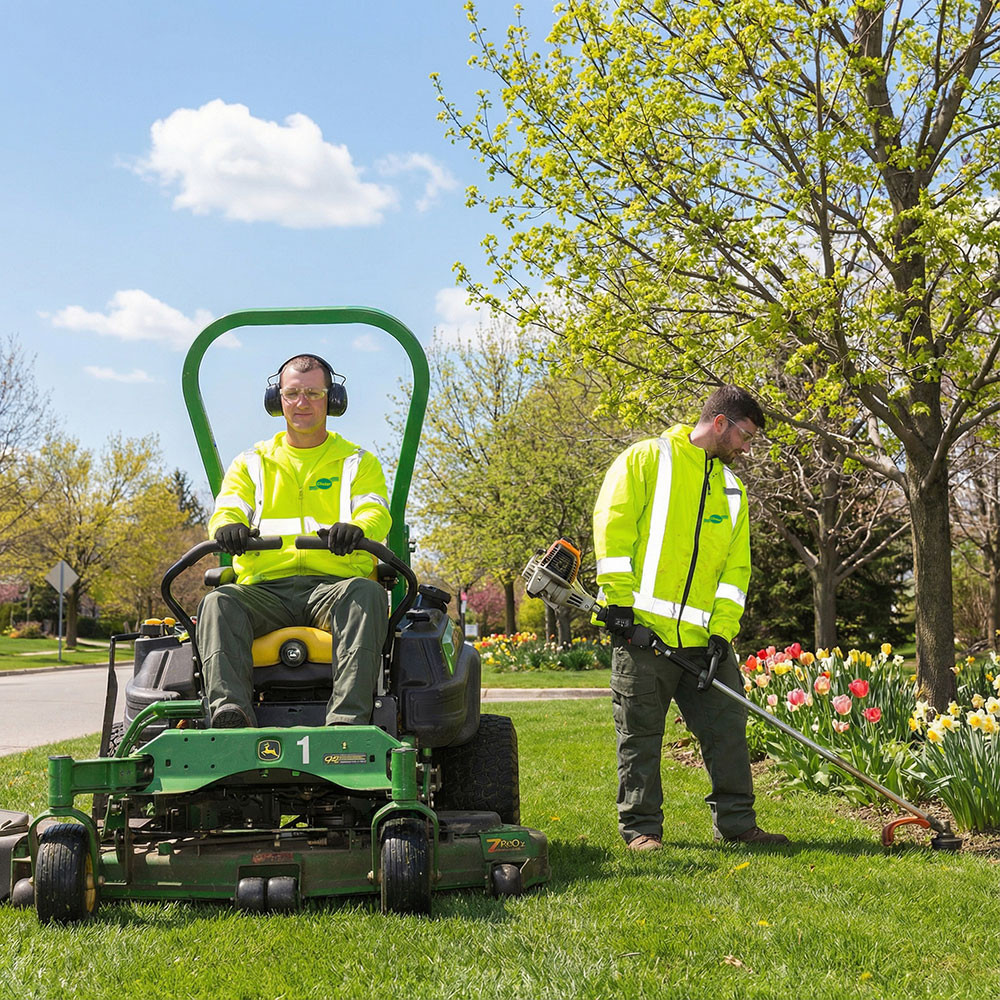
Summer is when commercial properties look their best and when maintenance decisions either protect or undermine that condition through the rest of the year. Landscape management through summer is more than mowing. It’s turf care, fertilization, weed control, irrigation management, and the ongoing attention to plantings that keeps a property looking maintained rather than merely mowed. Properties that defer this work in summer spend significantly more on remediation in fall and spring.
Summer is also the right time for landscape enhancements: seasonal plantings, mulch refresh, and hardscape repairs that improve the property’s presentation and condition before the scrutiny of fall evaluations and tenant renewals.
What to manage through summer:
- Maintain a consistent turf care and fertilization schedule
- Monitor irrigation systems for coverage gaps and inefficiencies
- Stay ahead of weed pressure in planted beds
- Schedule any paving repairs, line painting, or parking lot work for summer
And starting in July, begin your snow program evaluation.
Fall: September – October
Fall is where the next twelve months get decided. Property managers who use September and October effectively go into winter prepared. Reputable commercial snow removal contractors fill their capacity well before the first snowfall. In most Canadian markets, the contractors worth working with are fully committed by September and sometimes earlier. If you’re still evaluating snow contractors in October, your options have already narrowed significantly.
Before signing any snow contract, know what it should include. And if you’re asking the right questions of any contractor before signing, you’ll know early whether the company you’re evaluating has actually managed properties like yours before.
The work done in fall directly determines how quickly your property recovers in spring. A thorough fall program includes:
- Fall cleanup: removing leaves and organic debris before they smother turf and clog drains
- Turf aeration and overseeding where turf has thinned through the season
- Cutting heights adjusted for fall conditions: turf that goes into winter too long is more susceptible to winter disease
- Irrigation winterization before the first hard freeze: a missed winterization can result in significant repair costs in spring
- Snow staking placement: protect turf edges, curbs, and fixed features from plow damage before the first snowfall
Fall is the final opportunity to address pavement issues before freeze-thaw cycling begins. Any crack that hasn’t been sealed by November will be larger by April. Schedule parking lot sweeping to clear accumulated debris before winter, and confirm that your line painting and accessible markings are legible going into the season. For a full overview of what a proactive parking lot program looks like, take a look at our Parking Lot Maintenance services.
Winter: November – March

With the right planning in place, winter is the execution phase. A well-prepared property, a signed contract with a contractor who knows the site, and a clear service verification process means winter becomes manageable rather than reactive.
What a well-managed winter program looks like:
A professional snow and ice management program isn’t just clearing snow after it falls. It includes 24/7 weather monitoring and automated dispatch, pre-treatment for forecast freeze events, proactive site patrol during storm events, priority clearing of pedestrian access points and building entrances, and weekly activity reports that document every service visit.
That documentation matters more than most property managers realize. In the event of a slip-and-fall incident, your maintenance records are your first line of defence. Read more to understand the liability implications: Liability for Slip and Falls.
What to track through winter:
- Service verification records for every visit
- Storm event logs documenting response timing
- Any site conditions flagged by crews that need attention (ice formation patterns, drainage issues, areas where salt application is less effective)
- Contractor performance against the commitments in the contract
This information protects the property in the event of a liability claim and it tells you exactly what your snow program actually delivered, which informs whether you’re signing with the same contractor next fall.
Planning for Multiple Properties
Managing outdoor maintenance across a portfolio introduces complexity that a single-property approach can’t handle. Separate contractors in different cities mean separate contracts, separate invoices, separate service standards, and no consolidated view of how the portfolio is performing.
The property managers who manage multi-location portfolios effectively consolidate one vendor, one contract, one account manager who owns the program across every location. That’s how our national accounts program works: National Accounts.
Building a Vendor Relationship That Actually Works
The best outdoor maintenance outcomes come from a vendor relationship built on clear expectations, consistent communication, and documented accountability.
Before signing with any outdoor maintenance contractor, establish:
- Scope clarity. What is included, what is excluded, and how scope changes are handled mid-season
- Communication protocols. Who is the single point of contact, how are storm events communicated, and how quickly should you expect a response when something isn’t right
- Service verification. How is every visit documented, and how do you access those records
- Performance accountability. What happens when a commitment isn’t met? Is there a remedy, a credit, a process, or nothing
A contractor who can answer these specifically before you sign is a contractor who has managed accounts like yours before.
For year-round outdoor maintenance from a single accountable vendor, Find Your Nearest Clintar Location.